ENG
ENG
 ENG
ENG
 JPN
JPN
 CHI
CHI

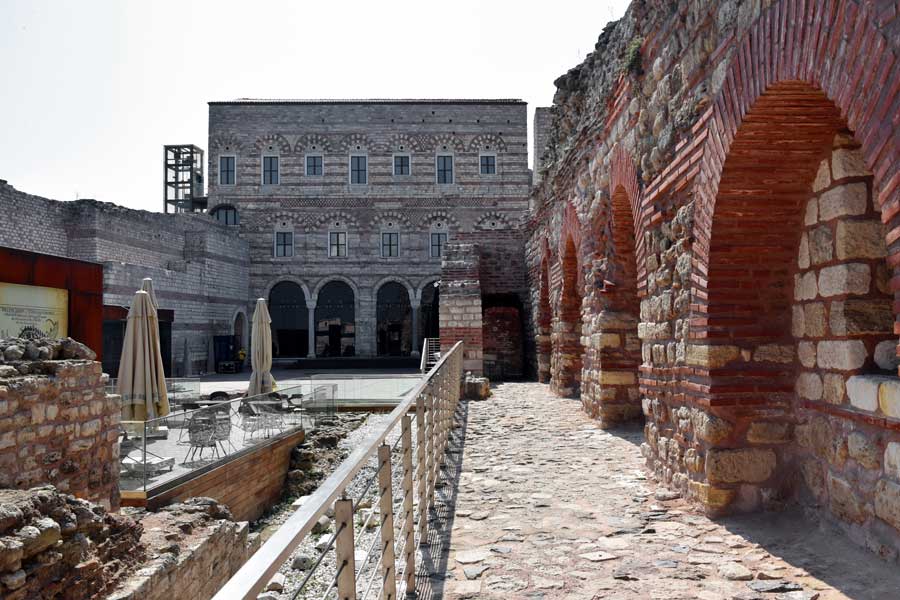
Tekfur Palace Museum (Porfirogennetos Palace)
The Tekfur Palace (Porphyrogenitus Palace) is a rare Byzantine imperial residence built in the late 13th century as part of the Blachernae Palace complex. After the conquest of Istanbul, it was used as a zoo, tile and glass workshops during the Ottoman period, and today it serves as a museum.
Construction: It was built in the late 13th century (around 1261–1282) during the reign of Emperor Michael VIII Palaiologos. It is located at the highest point of the city, integrated into the ancient Theodosian Walls in the Ayvansaray/Edirnekapı area.
The Name: "Porphyrogenitus" translates to "born in the purple," referring to children born to reigning Byzantine emperors. It specifically honors Prince Constantine, son of Michael VIII.
Significance: It is the only significant and well-preserved example of secular Byzantine architecture remaining in Constantinople.
Multiple Uses: Following the conquest of Constantinople in 1453, the palace served various purposes. It was temporarily used as an imperial menagerie, a glass factory, and famously, an Ottoman ceramic manufactory that produced high-quality tiles.
Abandonment: After suffering from fires and neglect, the structure was largely abandoned in the 17th century,
Restoration and Museum: Following extensive archaeological excavations that started in the 1990s and a comprehensive restoration, the palace was transformed into a museum.
Tour and Transfer Officer
Name : Mr. Ibrahim
Whatsapp Contact : +90 5392363387
Email : info@halimtransfer.com
Share On :